

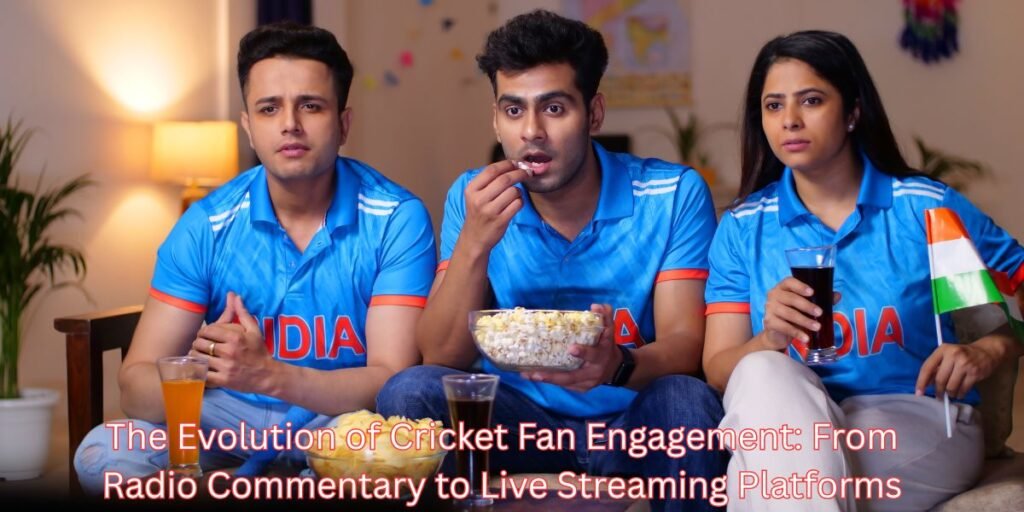

The look of cricket fandom has changed drastically from the way it began. A whole family used to sit together around the radio, and with only one voice, they would make the match in their minds. Now, that same excitement is being spread through TVs, laptops, and phones, where people are at the same time looking at live score apps, streams, and social media for the latest updates.
The love of the game remains the same, but the means of communication have been entirely different – much faster updates, more detailed statistics, and almost continuous access. People in this piece have a momentous walk through that transformation from one time to another, from an era of pure audio to the ones that have interactive platforms, and how each level has changed the fan experience.
Screens, Score Crawls, and the First Real-Time Feeds
With television, cricket was transformed from a narrative to a visual experience. Fans, for instance, were able to see the actual stadiums, interpret the body language, and assess the pitch conditions with their own eyes rather than just hearing about them. In a short while, TV channels also introduced score crawls at the bottom of the screen which allowed viewers to keep track of several games simultaneously without having to switch the broadcast.
The advent of the internet saw the emergence of simple live score websites and the introduction of mobile alerts which together formed the transitional phase between TV and the web. It was now possible to quickly check the score at work, school, or even while standing at a bus stop without anyone noticing.
Modern life hubs push this idea much further. On this website, for example, fans can read more about ongoing fixtures, follow odds moves, and track ball-by-ball numbers in one place. The result is a new viewing habit – instead of waiting for an evening highlight show, people check scores and micro-updates throughout the day, keeping the game close even when life is busy.
Social Media, Second Screens, and Community in Real Time
Social platforms have turned big overs into shared events, even when someone is watching in a quiet room. The moment a wicket falls or a final-ball six flies into the stands, timelines light up with jokes, quick reactions, and bite-sized analysis. Fans do not wait for the studio show to tell them what to think. They trade thoughts instantly with friends, creators, and complete strangers who care about the same game.
This shift has also created a true “second screen” habit. People watch on TV or a stream while their phone feeds them extra layers of context. Out of that, new kinds of fan content have appeared, for example:
- Quick stat threads explaining why an over was a turning point.
- Simple graphics showing spells, partnerships, or chase progress.
- Mini “team journey” posts that follow a side through a whole tournament.
- Live polls and arguments about selection, batting order, or field placements.
The match stops being just something you watch. It becomes an ongoing conversation that keeps evolving with every ball.
Live Streaming Platforms and Interactive Fan Experiences
The next big step was the move from classic broadcasters to dedicated streaming platforms. Instead of a single telecast, fans gained multi-camera views, pause and rewind controls, and interactive scorecards that updated with every ball. It became normal to tap a player’s name mid-innings and see their career record, recent form, and role in the team without leaving the match.
These platforms layered in features that make viewing feel more like participation. Live chats sit alongside the video, reaction emojis pulse across the screen after big moments, and integrated stats overlays let viewers choose how much information they want at any time. For many fans, a modern stream feels like two experiences at once – a live sporting event and a rich data story unfolding in parallel.
Services that combine video, ball-by-ball numbers, and historical context let supporters follow not just what is happening, but how it fits into a larger arc for a team or player. Looking ahead, the trend points toward even more personalization: choosing camera angles, toggling between “lean-back” and “data-heavy” modes, and receiving tailored highlights built around a favourite team or role. The only real challenge is a pleasant one – learning to enjoy constant access without letting it turn into constant pressure.
What the Journey Says About the Future of Cricket Fandom
From radio commentary that asked listeners to imagine every stroke, to dashboards that track almost everything that moves on the field, cricket fandom has gained layer after layer of detail. Each new medium added something – pictures, numbers, community, control – while the basic love for the game stayed put.
The real question for modern fans is not which era was “best,” but which mix works right now. Some days a full stream with stats and social chatter feels perfect. Other times, a simple score check is enough. The evolution of tools gives people more ways than ever to follow teams and timelines. Choosing the level of engagement that keeps cricket joyful, rather than overwhelming, is what will define healthy fandom in the years ahead.